SDR as a Service vs In-House SDR Teams: Which Model Drives Faster SaaS Growth?
SDR AS A SERVICE
Team Shilron
5/11/20263 min read

The Growing Pressure on SaaS Sales Teams
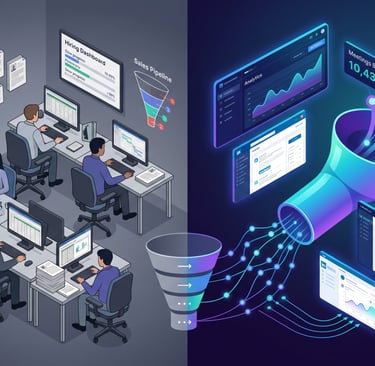
For B2B SaaS companies, pipeline generation has become more competitive and expensive than ever before. Customer acquisition costs continue to rise, inboxes are crowded, and hiring experienced sales talent is increasingly difficult.
At the same time, investors and leadership teams expect faster growth, shorter sales cycles, and predictable revenue.
This has created a major question for SaaS founders and sales leaders:
Should you build an in-house SDR team or use SDR as a Service?
The answer depends on your growth stage, budget, and speed-to-market goals.
What is an In-House SDR Team?
An in-house Sales Development Representative (SDR) team consists of employees dedicated to outbound sales, lead generation, and appointment setting.
Their responsibilities typically include:
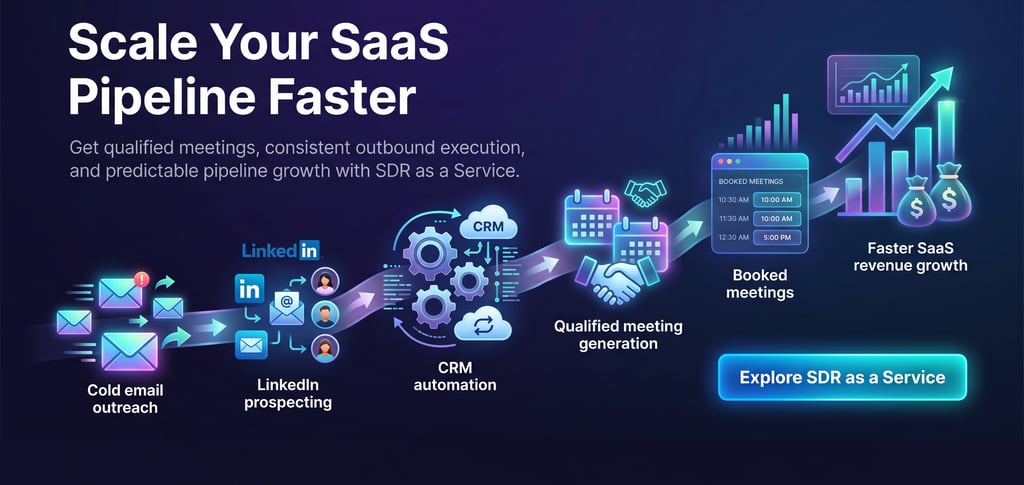
Cold email outreach
LinkedIn prospecting
Lead qualification
Booking sales meetings
Managing outbound campaigns
An internal SDR team works closely with marketing and sales leadership and becomes deeply aligned with the company’s messaging and product positioning.
The Hidden Cost of Building an In-House SDR Team
Many SaaS companies underestimate the actual cost of building and managing an internal outbound sales team.
Here is what the process usually looks like:
Hiring Timeline
Recruitment process: 30 to 45 days
Notice periods and onboarding: 30 to 60 days
Ramp-up time before productivity: 60 to 90
In total, companies may wait 3 to 6 months before seeing meaningful pipeline contribution.
Financial Investment
The average annual cost of a single SDR can include:
Salary and incentives
Sales engagement tools
CRM and prospecting software
Training and management costs
For many SaaS businesses, this can exceed $70,000 to $100,000 per SDR annually.
And despite this investment, there is still no guarantee of performance.
What is SDR as a Service?
SDR as a Service is an outsourced sales development model where an external team handles your outbound sales and lead generation efforts.
Instead of building internally, companies gain access to:
Experienced SDR professionals
Proven outbound sales frameworks
Ready-to-launch prospecting systems
Scalable lead generation infrastructure
This model has become increasingly popular among startups and growth-stage SaaS companies because it significantly reduces operational complexity.
Why More SaaS Companies Are Choosing SDR as a Service
1. Faster Time to Market
One of the biggest advantages of SDR as a Service is speed.
Instead of waiting months to hire and train SDRs, companies can launch outbound campaigns within 1 to 3 weeks.
This is especially important for:
Early-stage SaaS startups
Companies entering new markets
Businesses launching new products or services
Speed creates momentum, and momentum drives pipeline growth.
2. Lower Customer Acquisition Cost
Reducing CAC is a major priority for SaaS companies.
With SDR as a Service, businesses eliminate:
Recruitment costs
Employee overhead
Tool subscriptions for each SDR
Training expenses
Many companies report 30 to 50% lower customer acquisition costs after switching to outsourced SDR services.
3. Access to Proven Expertise
Internal SDR hires often require extensive coaching and experimentation.
In contrast, SDR as a Service providers already have:
Tested messaging frameworks
Multi-channel outreach systems
Proven outbound playbooks
Data-driven targeting strategies
This expertise often leads to:
Higher email reply rates
Better meeting booking rates
Improved sales qualified lead generation
4. Easier Scalability
Scaling an internal team requires additional hiring, onboarding, and management.
With SDR as a Service, scaling becomes much simpler.
Need to increase outreach volume?
Need to target a new ICP?
Need additional campaigns?
The infrastructure is already in place.
This flexibility makes outsourced sales development ideal for companies with aggressive growth targets.
When Should You Choose an In-House SDR Team?
An internal SDR team may make sense if:
You already have mature outbound processes
You have strong sales leadership internally
You can invest long-term in team development
Your messaging requires highly technical product expertise
Larger SaaS enterprises often prefer this approach because they have the resources to support it.
When Should You Choose SDR as a Service?
SDR as a Service is ideal if:
You need pipeline growth quickly
You want to reduce CAC
You are testing new markets
You lack internal outbound expertise
You want a scalable outbound sales engine without hiring delays
For most startups and mid-sized SaaS companies, this model offers the fastest path to revenue growth.
High-Value Keywords Covered
SDR as a Service, in-house SDR team, outsourced sales development, SaaS lead generation, outbound prospecting, appointment setting, sales development strategy, B2B sales outsourcing, pipeline generation, revenue acceleration.
Final Takeaway
Both models can generate pipeline successfully. The difference lies in speed, scalability, and operational efficiency.
An in-house SDR team offers control and long-term alignment, but requires significant investment and time.
SDR as a Service delivers:
Faster execution
Lower acquisition costs
Proven outbound expertise
Scalable lead generation systems
For SaaS companies focused on rapid growth, predictable pipeline generation, and efficient scaling, SDR as a Service is increasingly becoming the preferred model.
Shilron is a B2B growth marketing agency helping businesses generate qualified demand, build predictable pipeline, and accelerate revenue through integrated growth strategies.
Company
Copyright © 2026 Shilron LLP | All rights reserved | Predictable B2B growth execution.